
As the October air crispens across Sedgwick County and the leaves on the mature oaks in Riverside and College Hill begin to turn, Wichita homeowners know what is right around the corner. October in Kansas is that sweet spot where daytime temperatures feel comfortable, but nighttime dips below freezing start creeping into the forecast. Waiting until the first hard freeze warning flashes on your phone in early November is a dangerous game to play with your home’s plumbing.
I think we can all agree that dealing with a burst pipe in the dead of winter is one of the most frustrating home disasters imaginable. I promise that taking an hour this weekend to properly shut down and protect your outdoor hose bibs and backflow preventers will save you from an unexpected emergency call when the bitter cold sets in. In this guide, we will walk through the exact steps required to insulate and protect your exterior plumbing fixtures before the first severe freeze hits South-Central Kansas.
The Hidden Science of the First Kansas Freeze
To understand why outdoor faucets fail so catastrophically during Kansas winters, you have to look at how modern frost-free hose bibs are engineered. A standard frost-free spigot relies on a long stem that extends 8 to 12 inches inside your warm home, where the actual shut-off valve sits. As long as water can drain freely out of the spigot, the pipe inside the wall stays safe from freezing.
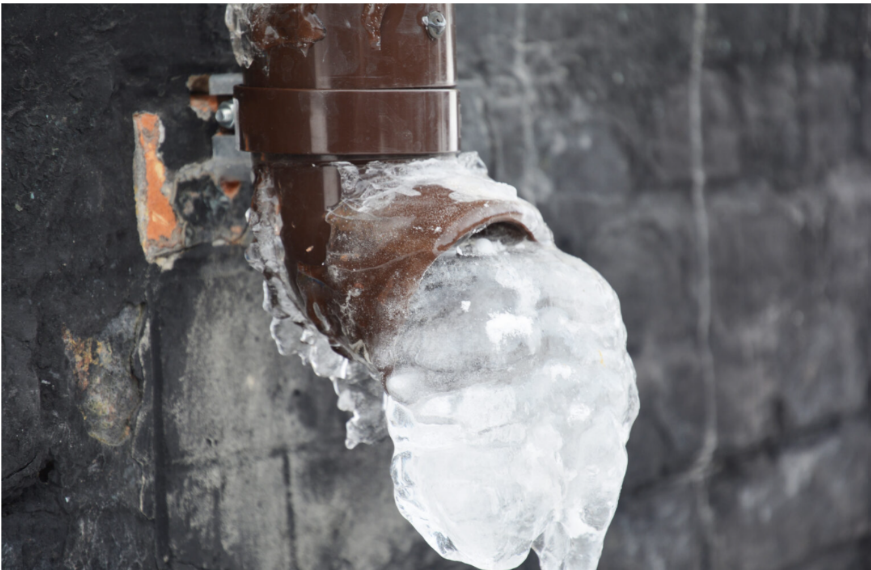
According to regional plumbing standards, the most common cause of split exterior pipes is simply leaving a garden hose attached into late autumn. When a hose remains connected, water gets trapped inside the spigot barrel. When temperatures drop below 32°F, that trapped water freezes and expands, splitting the copper pipe inside your wall cavity. You won’t notice the damage while the pipe remains frozen, but the moment the weather warms back up, water begins spraying directly into your basement or crawlspace.
Step-by-Step Outdoor Hose Bib Winterization
Protecting your outdoor spigots isn’t complicated, but doing it thoroughly requires a specific order of operations.
First, disconnect every garden hose, split valve, and timer attachment from all exterior spigots across your property. Drain the residual water out of your hoses before rolling them up and storing them in a garage or shed for the season.
Second, perform a close visual inspection of the spigot itself. Turn the handle on completely and check for any slow drips around the packing nut or spout. If a faucet drips during the summer, that same slow leak will form a solid mass of ice inside the valve during a cold October night, preventing the valve from functioning correctly.
Third, if your home is equipped with internal shut-off valves for outdoor lines, common in older Wichita neighborhoods like Crown Heights and Delano, head into your basement or crawlspace to turn those interior valves off. Once turned off inside, head back outside, open the exterior spigot fully, and open the small bleeder cap on the interior valve to drain any lingering water sitting in the line. Finally, cap each exterior spigot with an insulated foam cover to add a protective thermal barrier against high prairie winds.
Don’t Forget the Sprinkler Backflow Preventer
If your Wichita lawn features an underground irrigation system, the backflow preventer assembly (often called a PVB) sitting above ground on the side of your house is extremely vulnerable to early frost damage. Because these brass assemblies sit completely exposed to outdoor air, even a brief overnight dip into the upper 20s can crack the internal plastic poppets or split the heavy brass casing.
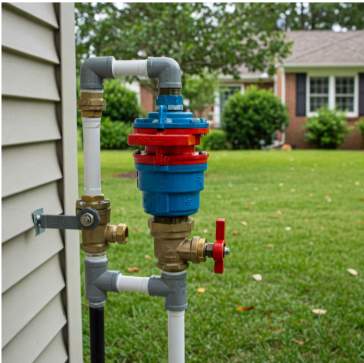
While a complete irrigation blowout using a commercial air compressor is recommended before winter, you must safeguard the exposed backflow device immediately during early October. Turn off the main water supply valve to the irrigation system, which is usually located in your basement or a underground valve box. Open the test cocks on the backflow device using a flathead screwdriver to release water pressure, and turn the ball valve handles to a 45-degree angle. Leaving ball valves fully open or fully closed traps water inside the ball mechanism, which will crack the brass when it freezes. Wrap the entire exposed assembly in an insulated backflow cover or a thick thermal blanket secured with waterproof tape.
Common Fall Freeze Questions
1. When should I disconnect my garden hoses in Wichita?
You should aim to have all garden hoses completely disconnected and stored by mid-October. While our first hard freeze usually arrives in early November, unseasonable cold fronts frequently roll across the Kansas plains without much warning in late October.
2. Will a foam faucet cover protect my spigot if I leave the hose attached?
No. A foam cover traps radiant heat coming from inside your home’s wall, but it cannot prevent water trapped inside a connected hose from freezing and expanding back into the pipe valve. The hose must always be removed first.
3. What should I do if my outdoor faucet is already frozen?
If you wake up to a frozen spigot, never attempt to thaw it using a blowtorch or open flame. Turn off the main water valve to your home or the specific line, and use a hair dryer on a low setting or wrap the pipe in warm towels to thaw it slowly while monitoring for leaks.
Pro-Tip: The 45-Degree Valve Trick
When shutting down exterior ball valves for the season, never leave the handles sitting parallel or perpendicular to the pipe. Setting the handle at a exact 45-degree angle opens the inner chamber partially, allowing trapped water behind the ball seal to drain out so the brass housing won’t split during severe drops in temperature.
Prepare Your Home Before the Cold Sets In
Taking the time to complete your fall freeze prep during crisp October afternoons is the ultimate low-cost insurance policy for your home. By clearing hoses, draining lines, and insulating exposed brass devices, you eliminate the risk of waking up to an expensive plumbing emergency during the first winter storm.
Need help winterizing your irrigation backflow assembly or replacing a worn outdoor spigot?
Don’t wait for the temperature to plunge.
Call Lyday Plumbing 316-612-0458 or visit our website today to schedule a comprehensive Fall Outdoor
Plumbing Audit before the Kansas freeze arrives!